The Behind-the-Walls Work That Makes a Shower Actually Last
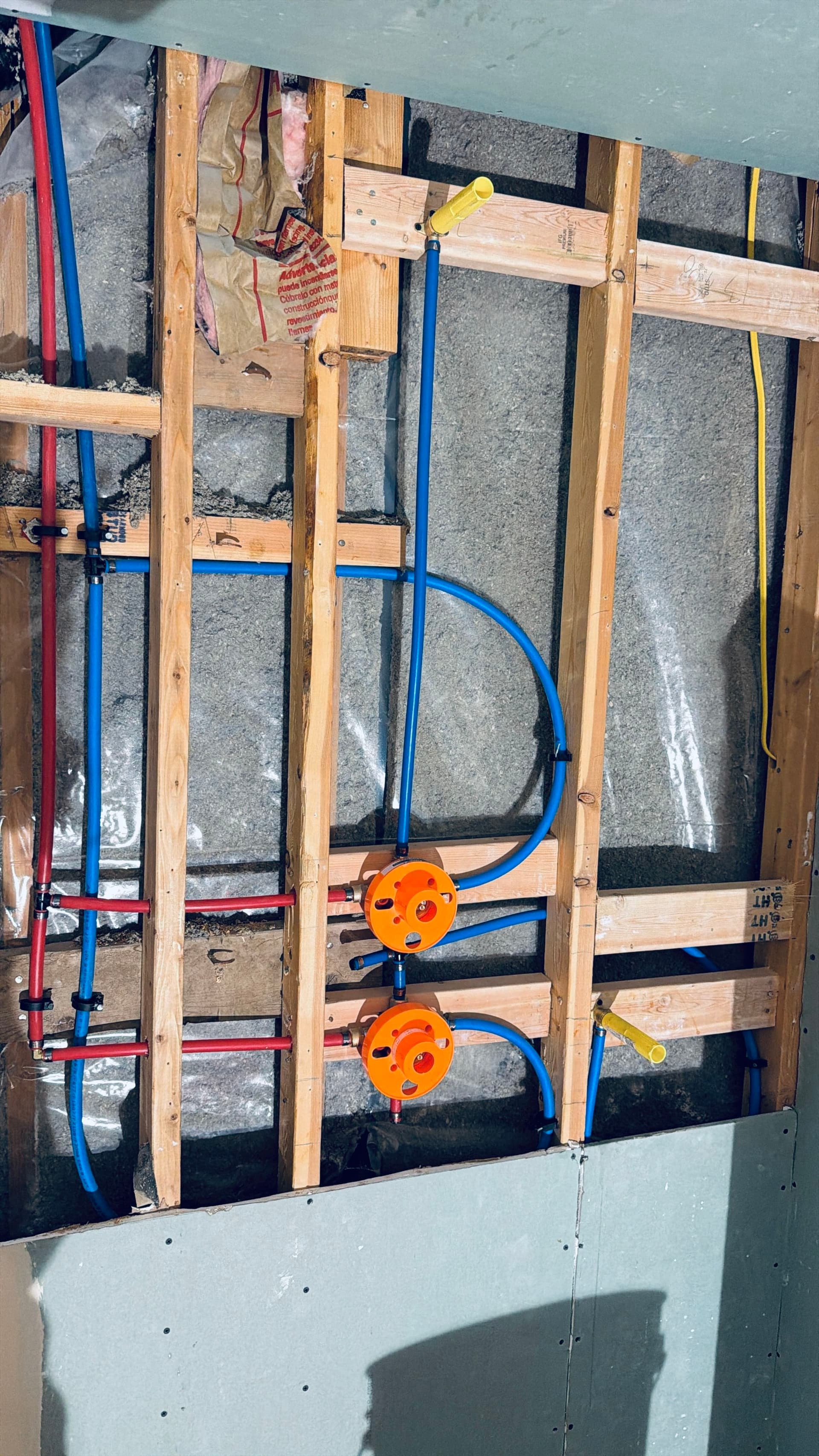
Most people think about tile, fixtures, and finishes when they picture a bathroom remodel. That makes sense - it's what you see every day. But what's inside the walls is what determines whether that shower works flawlessly for the next 20 years or gives you headaches down the road.
Here's what we were working with on this one. PEX supply lines - blue for cold, red for hot - routed cleanly through the stud bays and secured properly so nothing shifts over time. The orange shower valve blocking flanges are positioned dead-center in the wall cavity, set at exactly the right depth so the valve trim sits flush once the tile goes up. That kind of precision at the rough-in stage is what prevents callbacks and costly fixes later.
We treat this part of the job with the same level of care as the finished work. It's easy to cut corners behind drywall - most homeowners would never know. But sloppy rough-in plumbing causes low pressure, leaks, and valve problems that show up months or years after the remodel is done. We'd rather do it right the first time.
The planning that goes into a layout like this matters too. Supply lines need to be sized correctly, runs need to be efficient, and the valve location has to account for the finished wall thickness. These aren't afterthoughts - they're decisions made before a single piece of tile gets ordered. That's what separates a remodel that holds up from one that doesn't.
If you're thinking about redoing a bathroom, this is the kind of work you want to ask your contractor about. Not just what the tile looks like, but how they handle what's behind it.